
The Pain We All Carry
Someone broke your trust. A friend betrayed you. A family member said words that cut deep. A colleague took credit for your work. A partner walked away.
We have all been hurt. We have all felt that burning anger in our chest. That voice in our head that replays what happened, again and again.
You want justice. You want them to suffer like you suffered. You want revenge.
But what if I told you that holding onto that anger is hurting YOU more than it hurts them?
What if forgiveness is not about them at all? What if it’s about setting yourself free?
What Jesus Taught About Forgiveness
Two thousand years ago, Peter asked Jesus a question we all ask:
“Lord, how many times should I forgive someone who keeps hurting me? Seven times is enough, right?”
Peter thought he was being generous. Seven times felt like a lot.
But Jesus shocked him with His answer:
“Not seven times, Peter. Seventy times seven.” – Matthew 18:22

That is 490 times. But Jesus was not asking us to count. He was saying: Keep forgiving. Always. Without limit.
This sounds impossible, doesn’t it? How can we forgive someone who destroyed us?
Here is the truth Jesus knew: Forgiveness is not a gift you give them. It is a gift you give yourself.
The Science of Unforgiveness: What Happens in Your Body
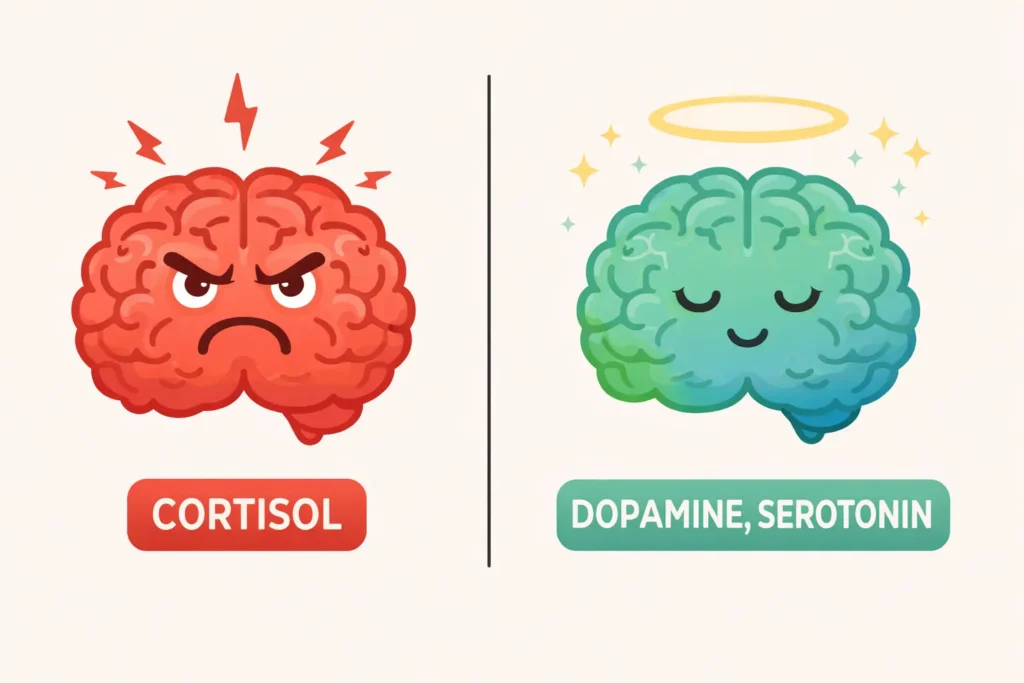
Modern science has proven something remarkable. When you refuse to forgive, your body pays a heavy price.
Your Brain Gets Trapped in a Loop
When you hold a grudge, your brain keeps replaying the painful memory. Scientists call this rumination.
It is like watching the same terrible movie over and over. Each time you replay it, the pain becomes deeper. The wound stays fresh.
Your brain cannot heal because you will not let it.
Stress Hormones Flood Your System
When you stay angry, your body releases cortisol – the stress hormone.
A little cortisol is normal. But constant anger means constant cortisol. This damages your body in serious ways:
- Weakens your immune system – You get sick more often
- Raises blood pressure – Risk of heart attack and stroke increases
- Disrupts sleep – You cannot rest properly
- Causes anxiety and depression – Your mental health suffers
- Ages you faster – Chronic stress makes you look and feel older
Think about it: Not forgiving someone is like drinking poison and waiting for them to die. You are the one who gets sick.
Your Heart Literally Aches
Studies from Johns Hopkins University and Mayo Clinic show that chronic anger and bitterness damage your cardiovascular system.
People who cannot forgive have:
- Higher risk of heart disease
- More inflammation in the body
- Shorter life expectancy
Your unforgiveness is killing you slowly.
The Science of Forgiveness: What Happens When You Let Go
Now the good news. When you choose forgiveness, your brain and body begin to heal.
Your Brain Releases Healing Chemicals
Forgiveness triggers the release of positive neurochemicals:
- Dopamine – Creates feelings of reward and pleasure
- Serotonin – Brings peace and emotional stability
- Oxytocin – Promotes connection and reduces fear
These are your body’s natural medicine. They are free. They are powerful. And forgiveness unlocks them.
Stress and Inflammation Decrease
When you forgive, cortisol levels drop. Your body stops being in constant fight-or-flight mode.
Research shows people who practice forgiveness experience:
- Lower blood pressure
- Better sleep quality
- Reduced chronic pain
- Stronger immune function
- Less anxiety and depression
Your Mental Health Improves
A Stanford University study found that people who went through forgiveness training showed:
- 70% decrease in feelings of hurt
- Significant reduction in anger
- Increased optimism about the future
- Better relationships overall
Jesus knew this 2000 years before scientists proved it.
A Powerful Story: Forgiveness That Changed Everything
Let me tell you about Immaculée Ilibagiza from Rwanda.

In 1994, during the Rwandan genocide, Immaculée’s entire family was murdered. Her mother, father, and two brothers – all killed in the most brutal way.
She survived by hiding in a tiny bathroom for 91 days with seven other women. Every day, she heard killers searching for her. Every night, she cried for her family.
When the genocide ended, Immaculée had lost everything. The hatred and anger consumed her. She could not eat. She could not sleep. She was dying inside.
Then she remembered what Jesus said on the cross:
“Father, forgive them, for they do not know what they are doing.” – Luke 23:34

Immaculée made the hardest decision of her life. She chose to forgive the men who killed her family.
She even went to the prison and met one of the killers face to face. She looked him in the eye and said: “I forgive you.”
What happened next was miraculous:
The hatred that was destroying her melted away. The physical pain in her body disappeared. She could breathe again. She could smile again. She felt free.
Immaculée said: “Forgiveness is the only way to heal. When I forgave, I set a prisoner free – and that prisoner was me.”
Understanding What Forgiveness Really Means
Many people resist forgiveness because they misunderstand what it means.
Forgiveness Is NOT:
❌ Saying what they did was okay – It was not okay. It was wrong. Forgiveness does not excuse their behavior.
❌ Forgetting what happened – You will remember. Forgiveness does not erase memory.
❌ Letting them hurt you again – Forgiveness does not mean allowing abuse to continue.
❌ Restoring the relationship – You can forgive someone and still maintain healthy boundaries.
❌ Waiting for an apology – They may never apologize. Forgiveness is not dependent on them.
Forgiveness IS:
✅ Releasing your anger – Letting go of the hatred that is poisoning you.
✅ Choosing peace over bitterness – Deciding you deserve to be free from this pain.
✅ Stopping the cycle of revenge – Breaking the chain of hurt.
✅ Setting yourself free – You are the one who benefits most from forgiveness.
Forgiveness is a gift you give to yourself.
How to Forgive: A Practical Guide
Knowing you should forgive and actually doing it are two different things. Here is a step-by-step process.
Step 1: Acknowledge the Pain
Do not minimize what happened. Do not pretend it did not hurt.
Be honest with yourself: “Yes, this hurt me deeply. Yes, I am angry. Yes, I feel betrayed.”
You cannot heal a wound you refuse to acknowledge.
Step 2: Decide to Forgive
Forgiveness is a choice, not a feeling. You may not feel like forgiving. Do it anyway.
Say out loud: “I choose to forgive [person’s name]. I release them and I release myself.”
This is a decision of your will, not your emotions.
Step 3: Write It Down
Writing is powerful therapy. Get a journal and write:
- What they did
- How it affected you
- What you are choosing to release
- What you want to feel instead
Then, if it helps, burn or tear up that paper. It is symbolic of letting go.
Step 4: Pray for Strength
You cannot do this alone. Ask God for help.
A simple prayer:
“Jesus, I cannot do this on my own. My heart is full of anger and pain. Please give me the strength to forgive. Heal my heart. Set me free. Help me to love as You love. Amen.”
Step 5: Remember You Need Forgiveness Too
We have all hurt people. We have all said things we regret. We have all needed forgiveness.
Jesus said: “Forgive, and you will be forgiven.” – Luke 6:37
When you forgive others, you are also extending grace to yourself.
Step 6: Be Patient with the Process
Forgiveness is not a one-time event. It is a journey.
Some days you will feel free. Other days the anger will return. That is normal.
Every time the anger comes back, choose forgiveness again.
This is what Jesus meant by seventy times seven. Keep choosing forgiveness until it becomes natural.
The Transformation That Follows

When you truly forgive, your whole life changes.
You will notice:
✅ Better physical health – Lower blood pressure, better sleep, less pain
✅ Improved mental health – Less anxiety, less depression, more peace
✅ Stronger relationships – You become more compassionate, more understanding
✅ Greater joy – The burden lifts, life feels lighter
✅ Deeper faith – You understand God’s love in a new way
This is what Jesus wanted for you all along.
The Ultimate Example: Jesus on the Cross
If you think your situation is too hard to forgive, remember Jesus.
He was betrayed by His close friend Judas. He was denied by Peter, whom He loved. He was mocked, beaten, and nailed to a cross.
And while hanging there, dying in agony, He looked at the people who were killing Him and said:
“Father, forgive them, for they do not know what they are doing.” – Luke 23:34
Jesus did not wait until He felt like forgiving. He did not wait for an apology. He forgave in the middle of His suffering.
If He can forgive that, you can forgive your situation.
Your Next Step
Right now, you have a choice.
You can continue carrying the weight of unforgiveness. Let it destroy your health, your peace, your joy. Let it poison every good thing in your life.
Or you can choose freedom.
Think of one person you need to forgive. Maybe it is someone from your past. Maybe it is someone you see every day. Maybe it is yourself.
What will you choose?
A Prayer of Forgiveness
If you are ready to take this step, pray this prayer with me:
Dear Jesus,
I have been holding onto anger and pain for too long. It is destroying me from the inside. Today, I choose to let it go.
I choose to forgive [say the person’s name]. I release them from the debt they owe me. I will not seek revenge. I will not hold this against them anymore.
I also forgive myself for holding onto this bitterness. I forgive myself for the ways I have hurt others. I receive Your forgiveness and Your grace.
Fill me with Your peace. Heal my heart. Help me to move forward without this burden. Let Your love flow through me.
Thank You for forgiving me. Help me to forgive as You have forgiven.
Amen.
Remember This
Science says: Forgiveness heals your body and mind.
Jesus says: Forgiveness frees your soul.
Both are absolutely right.
When you forgive, you are not doing it for them. You are doing it for yourself. You are choosing life over death. You are choosing freedom over prison. You are choosing peace over pain.
Jesus was right 2000 years ago. Science proves it today. Now it is your turn to experience it.
Share this article with someone who needs to hear it. Your story of forgiveness could save someone’s life.
Comment below: What is one thing that changed for you when you chose to forgive?
📖 Next article: “From Perfectionism to Peace: How Jesus Heals the Overachiever’s Heart”